What to Do When Your Roof Leaks After a Lexington Storm
A practical Lexington homeowner guide for roof leaks after wind or rain, including what to check safely, when to call, and what roofers look for.
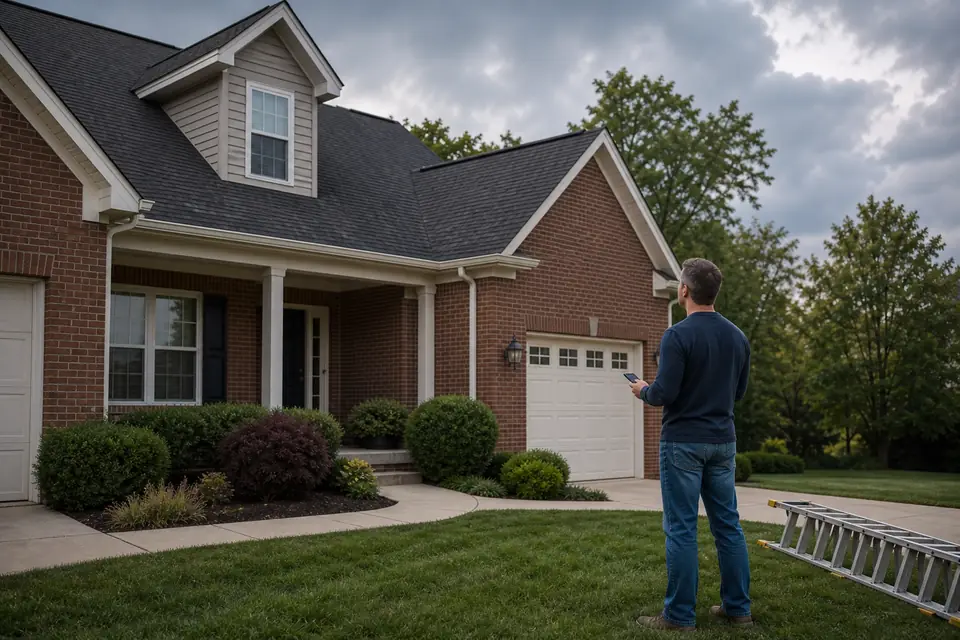
Start with safety, not the roof.
If rain is still moving through the area, stay off the roof. Your first job is to reduce interior damage: move furniture, protect electronics, place a container under active dripping, and take photos of stains or wet spots.
Look for clues from the ground.
From a safe spot outside, look for missing shingles, lifted edges, branches on the roof, bent flashing, gutter damage, or debris gathered in valleys. These clues help the roofing conversation move faster when you call.
Common leak sources after wind and rain
- Lifted or missing shingles
- Damaged pipe boots
- Chimney and wall flashing gaps
- Valley wear where water concentrates
- Gutter overflow pushing water behind fascia
Why Lexington storm leaks can be hard to trace
Many Lexington homes have roof details that move water sideways before it appears indoors. Older homes may have chimney flashing, porch tie-ins, or previous repair areas. Newer subdivision roofs may have long valleys, ridge vents, pipe boots, and wall transitions that only leak during wind-driven rain.
That is why the stain on the ceiling is a clue, not a final diagnosis. Water can run along rafters, decking, insulation, or drywall seams before it drops into the room. When you call, describe the room, the nearest wall, the timing of the rain, and whether the stain grows during every storm or only during heavy wind.
Need roof leak help in Lexington?
Call now and describe what you are seeing. You can also review our roof leak repair, storm damage roof repair, and roof inspection pages.
Call (859) 809-8024Repair or replacement?
A single damaged pipe boot, flashing detail, or shingle section may be repairable. Replacement becomes more likely when shingles are brittle, granule loss is widespread, leaks repeat in multiple areas, or the roof is near the end of its service life.
What to have ready before the roofing visit
If it is safe, gather photos of the stain, attic moisture, missing shingles visible from the ground, gutter damage, or debris near the roof edge. Write down when the leak started and whether water was actively dripping or only staining. Keep any shingles that landed in the yard, but do not climb up to retrieve material from the roof.
For insurance-related storm concerns, keep the conversation factual. A roofing visit can document visible conditions and explain repair options, but claim decisions belong to the insurance carrier. Avoid any contractor who promises approval before an adjuster has reviewed the claim.
If the leak stopped when the rain stopped, still mention it. Intermittent leaks often point to wind direction, flashing movement, gutter backup, or a roof detail that only fails during heavier storms.